Insights
September 19, 2026
How SLB sorts its stories across owned, executive and earned channels
Insights
September 19, 2026
How SLB sorts its stories across owned, executive and earned channels
SLB's corporate LinkedIn page runs on its people, its chief executive carries the strategy, and the account of how the company repositioned itself was left to the business press. That division is deliberate, and the reason behind it gives any company a way to decide which of its stories belong on which channel.
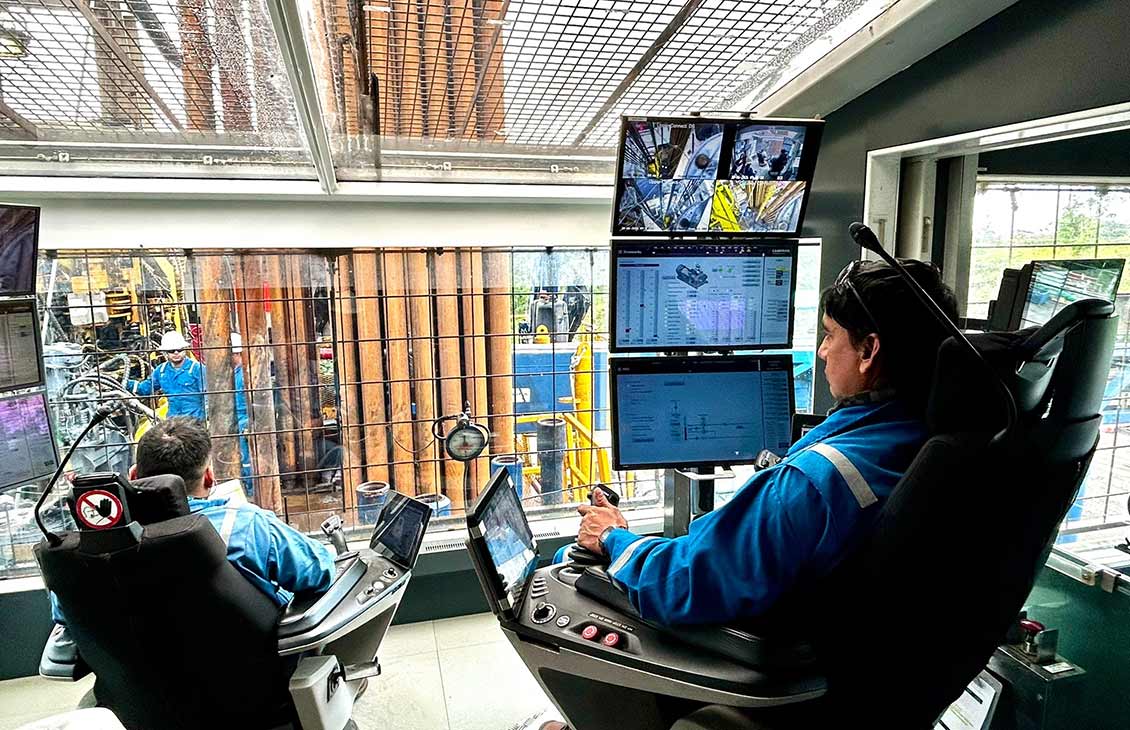
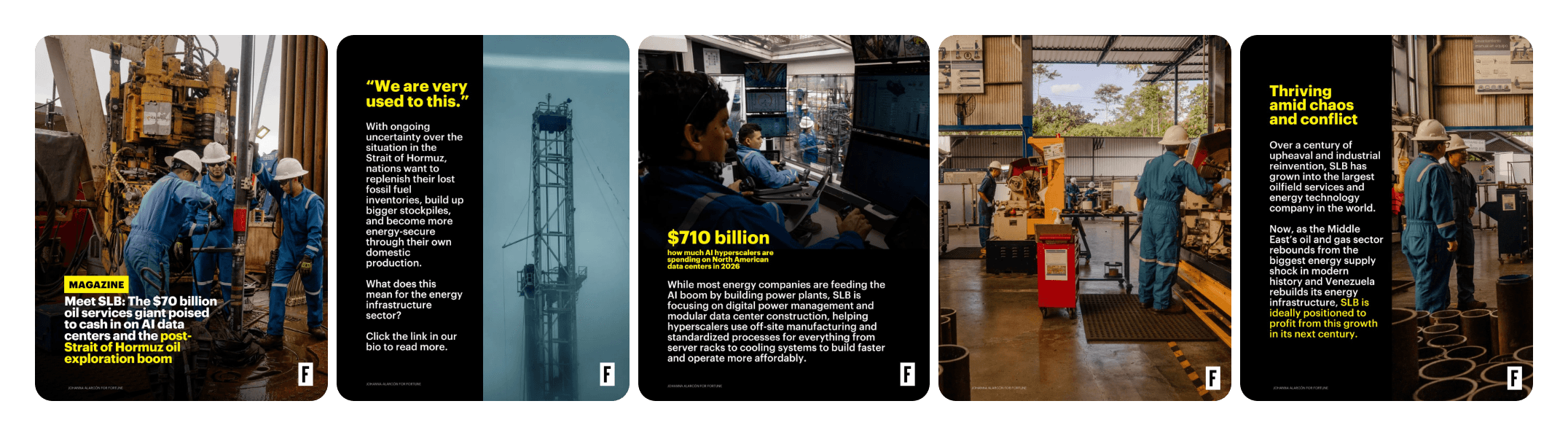
In late July, Fortune published a profile of SLB by its energy editor Jordan Blum, under the headline "The quiet giant of big oil", tracing how a company built on subsurface measurement had ended up supplying data centre infrastructure. Three days later SLB shared it twice in a single day. Its LinkedIn page thanked the writer and said that what connects each chapter is our people. Olivier Le Peuch, the chief executive, shared the same piece from his own profile and drew the line from the first well logs through early digital and AI deployment to data centre solutions.
The same split runs through everything else SLB publishes. Each channel takes a different kind of story, and the sorting follows a logic worth borrowing.
The company told through its people
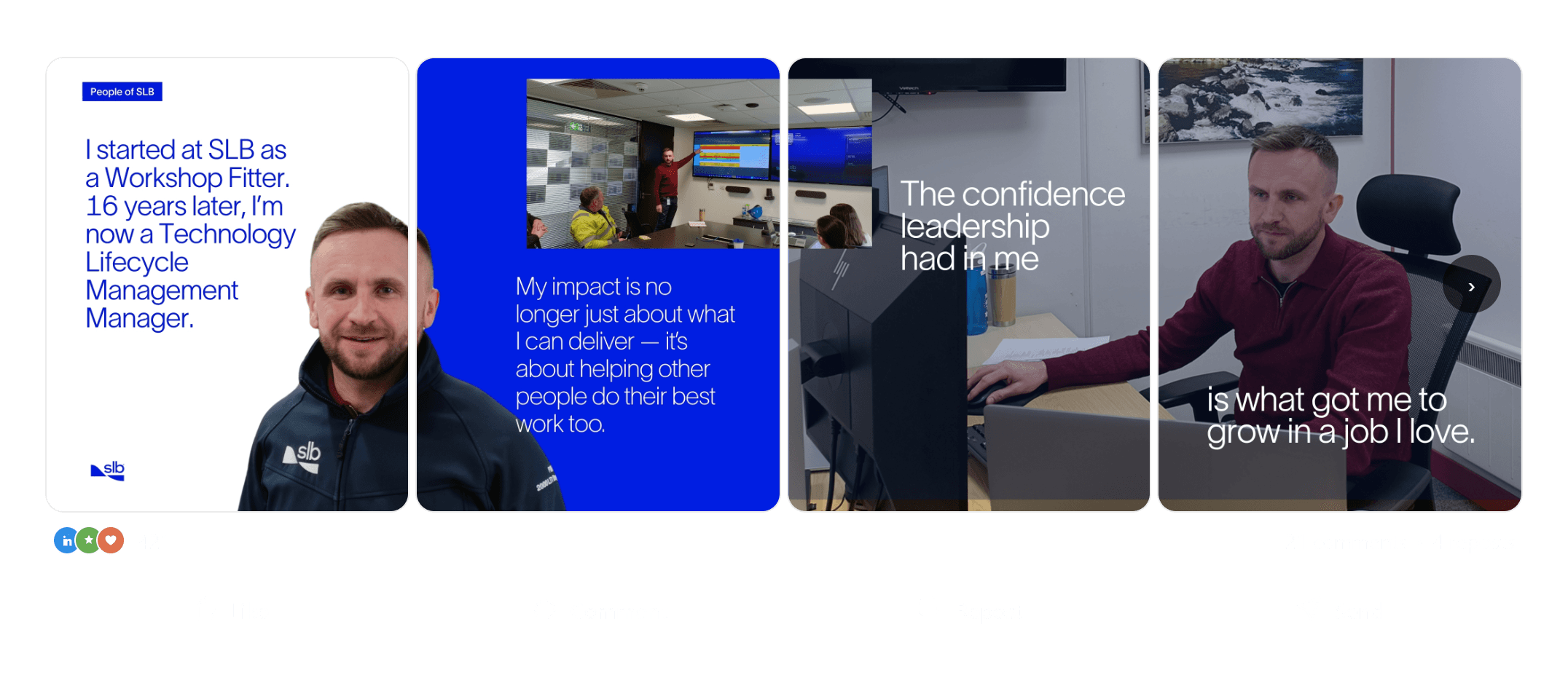
SLB presents itself as the people who constitute it rather than as an institution that happens to employ them. A named individual, a team or a site sits at the centre of nearly every LinkedIn post, and the corporate achievement is left to be inferred from what those people did. The approach itself is familiar, since employee storytelling has been standard practice in large-company communications for years.
We read several months of posts on SLB's main company page. Dan Craita explaining what local community programmes meant to his own career, Hygu Gomes on what it feels like to leave a mark on a country, the Luanda Performance Live Centre clearing more than a hundred projects in its first year, a drilling engineer in Ecuador on at-bit imaging, workplace recognitions from Newsweek and Disability:IN.
That bet pays across every audience at once, which is why it holds as standing policy instead of a campaign. A buyer underwriting integrated multi-year work is really underwriting whether SLB's people will perform competently in Angola, in Kuwait, on a deepwater development, so a post about a country manager in Eastern Europe works as culture content while serving as capability evidence. An investor sees an organisation holding on to the engineers its margins depend on, a partner sees a culture it can work beside, and a graduate sees somewhere to build a career. A company that looks after its people and shows them in good light reads as a good company without having to assert it, and no corporate adjective achieves that on its own.
The strategy in the chief executive's voice
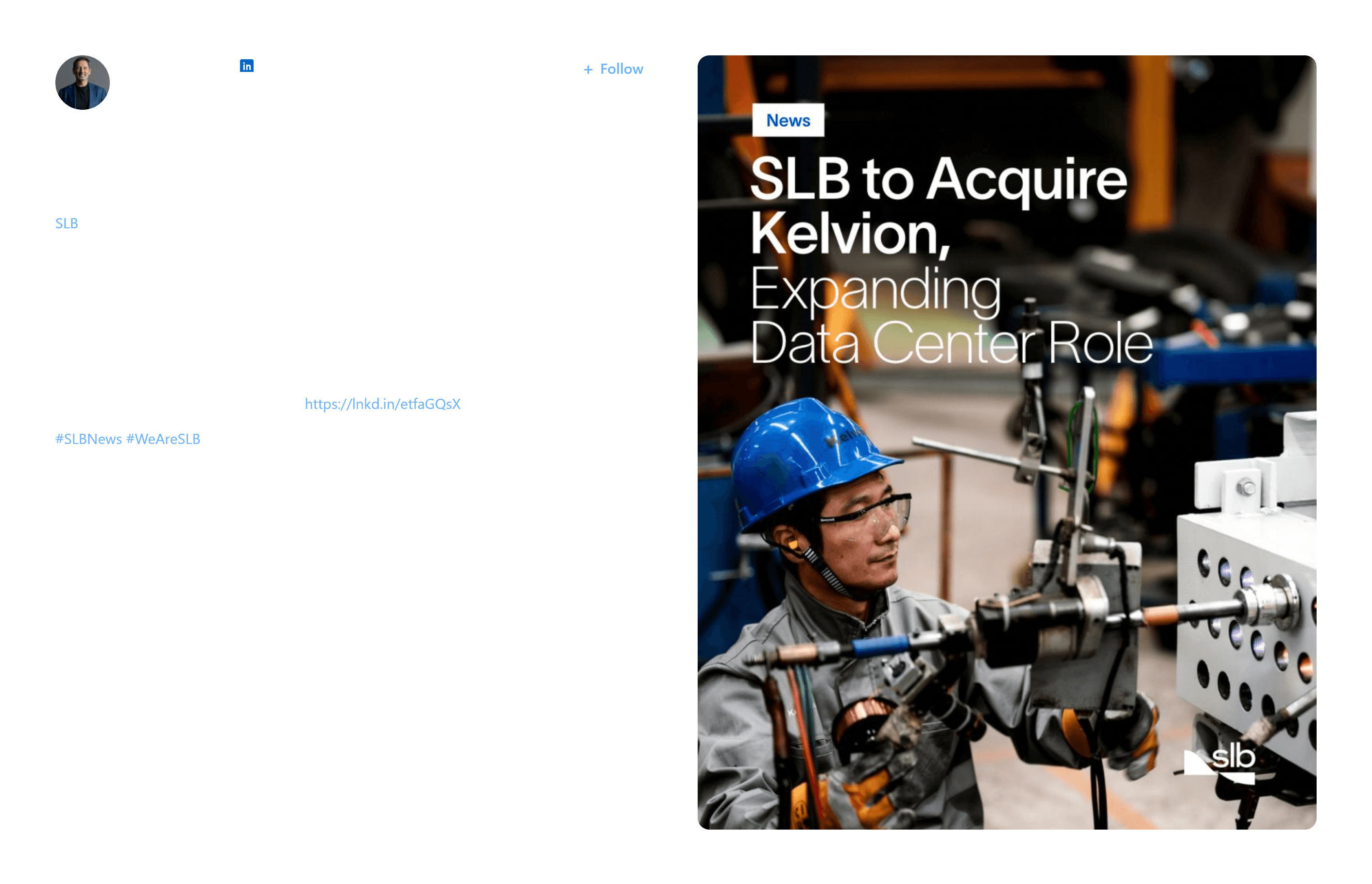
Le Peuch's own feed carries the strategic material the company page leaves out. The NVIDIA collaboration on an AI Factory for Energy is on his profile and absent from the company page entirely. So is the long-term agreement with PDVSA, which he announced alongside a note about SLB's 97-year uninterrupted presence in Venezuela, and the five-year Kuwait contract signed under the patronage of the prime minister. The Kelvion acquisition in August shows the same division inside a single piece of news. The LinkedIn page gave it five even-toned lines about strengthening the Data Center Solutions business, while Le Peuch opened on AI driving the most significant investment cycle of our lifetime and closed on an ambition to become an industrial technology partner to the data centre industry.
Where both channels carried the same strategic news, his profile drew the bigger response. The Kelvion acquisition ran 1,684 reactions on the LinkedIn page against 2,691 on his.
The story SLB cannot tell about itself
SLB's 2022 rename announcement makes its case on decarbonisation and the energy transition. Its tagline is about a balanced planet, and its four named focus areas are new energy systems, industrial decarbonisation, digital at scale and oil and gas innovation. Data centres are not mentioned anywhere in it.
What the rename bought was room to stop being defined by a single category, and the payoff arrived four years later in a market that announcement never anticipated. Hyperscalers have told investors they plan to spend roughly $710 billion on North American data centres in 2026 alone. SLB widened its own definition for the energy transition and then cashed the option on AI infrastructure.
That is a vindication story, and vindication is the one thing a company cannot tell about itself. We changed our name, the industry called it a mistake, and four years on we were right is unpublishable in a corporate voice, because the claim carries weight only when someone other than the claimant makes it. Fortune published exactly that, quoting an analyst who called the rename "a very smart thing for them to do", even though "most people in the industry thought it was a huge mistake". The same sentences on SLB's own page would read as a press release.
That gives a working test for sorting material across the three streams. A story whose credibility depends on who is telling it belongs with the third party, and no amount of owned-channel effort substitutes for it.
The condition most firms do not have
SLB has built three streams, with the company page carrying character and proof of delivery, the chief executive carrying strategy and market moves, and the business press carrying the full arc. We are inferring intent from published output here rather than reporting what anyone decided internally, and a company with 3.6 million followers and a hundred-year history has options that do not generalise.
The arrangement depends on having a Jordan Blum, and on a magazine deciding your repositioning is worth a feature. Most engineering and industrial firms will never get that call, which means the third stream does not exist for them unless they build it themselves and publish to it with the same seriousness a magazine would. Splitting the story across channels works for a company that has somewhere to put the part it cannot say itself. Everyone else has to build that somewhere first.
Sources

Mohannad
Mohannad believes great B2B marketing is built on human connection and powerful content. As founder and CEO of Cactix, he draws on a strong foundation in finance, technology, and strategy to help brands grow and succeed. He’s also a multilingual global citizen, a father of three, and an avid reader, writer, and bridge player.
SLB's corporate LinkedIn page runs on its people, its chief executive carries the strategy, and the account of how the company repositioned itself was left to the business press. That division is deliberate, and the reason behind it gives any company a way to decide which of its stories belong on which channel.
In late July, Fortune published a profile of SLB by its energy editor Jordan Blum, under the headline "The quiet giant of big oil", tracing how a company built on subsurface measurement had ended up supplying data centre infrastructure. Three days later SLB shared it twice in a single day. Its LinkedIn page thanked the writer and said that what connects each chapter is our people. Olivier Le Peuch, the chief executive, shared the same piece from his own profile and drew the line from the first well logs through early digital and AI deployment to data centre solutions.
The same split runs through everything else SLB publishes. Each channel takes a different kind of story, and the sorting follows a logic worth borrowing.
The company told through its people
SLB presents itself as the people who constitute it rather than as an institution that happens to employ them. A named individual, a team or a site sits at the centre of nearly every LinkedIn post, and the corporate achievement is left to be inferred from what those people did. The approach itself is familiar, since employee storytelling has been standard practice in large-company communications for years.
We read several months of posts on SLB's main company page. Dan Craita explaining what local community programmes meant to his own career, Hygu Gomes on what it feels like to leave a mark on a country, the Luanda Performance Live Centre clearing more than a hundred projects in its first year, a drilling engineer in Ecuador on at-bit imaging, workplace recognitions from Newsweek and Disability:IN.
That bet pays across every audience at once, which is why it holds as standing policy instead of a campaign. A buyer underwriting integrated multi-year work is really underwriting whether SLB's people will perform competently in Angola, in Kuwait, on a deepwater development, so a post about a country manager in Eastern Europe works as culture content while serving as capability evidence. An investor sees an organisation holding on to the engineers its margins depend on, a partner sees a culture it can work beside, and a graduate sees somewhere to build a career. A company that looks after its people and shows them in good light reads as a good company without having to assert it, and no corporate adjective achieves that on its own.
The strategy in the chief executive's voice
Le Peuch's own feed carries the strategic material the company page leaves out. The NVIDIA collaboration on an AI Factory for Energy is on his profile and absent from the company page entirely. So is the long-term agreement with PDVSA, which he announced alongside a note about SLB's 97-year uninterrupted presence in Venezuela, and the five-year Kuwait contract signed under the patronage of the prime minister. The Kelvion acquisition in August shows the same division inside a single piece of news. The LinkedIn page gave it five even-toned lines about strengthening the Data Center Solutions business, while Le Peuch opened on AI driving the most significant investment cycle of our lifetime and closed on an ambition to become an industrial technology partner to the data centre industry.
Where both channels carried the same strategic news, his profile drew the bigger response. The Kelvion acquisition ran 1,684 reactions on the LinkedIn page against 2,691 on his.
The story SLB cannot tell about itself
SLB's 2022 rename announcement makes its case on decarbonisation and the energy transition. Its tagline is about a balanced planet, and its four named focus areas are new energy systems, industrial decarbonisation, digital at scale and oil and gas innovation. Data centres are not mentioned anywhere in it.
What the rename bought was room to stop being defined by a single category, and the payoff arrived four years later in a market that announcement never anticipated. Hyperscalers have told investors they plan to spend roughly $710 billion on North American data centres in 2026 alone. SLB widened its own definition for the energy transition and then cashed the option on AI infrastructure.
That is a vindication story, and vindication is the one thing a company cannot tell about itself. We changed our name, the industry called it a mistake, and four years on we were right is unpublishable in a corporate voice, because the claim carries weight only when someone other than the claimant makes it. Fortune published exactly that, quoting an analyst who called the rename "a very smart thing for them to do", even though "most people in the industry thought it was a huge mistake". The same sentences on SLB's own page would read as a press release.
That gives a working test for sorting material across the three streams. A story whose credibility depends on who is telling it belongs with the third party, and no amount of owned-channel effort substitutes for it.
The condition most firms do not have
SLB has built three streams, with the company page carrying character and proof of delivery, the chief executive carrying strategy and market moves, and the business press carrying the full arc. We are inferring intent from published output here rather than reporting what anyone decided internally, and a company with 3.6 million followers and a hundred-year history has options that do not generalise.
The arrangement depends on having a Jordan Blum, and on a magazine deciding your repositioning is worth a feature. Most engineering and industrial firms will never get that call, which means the third stream does not exist for them unless they build it themselves and publish to it with the same seriousness a magazine would. Splitting the story across channels works for a company that has somewhere to put the part it cannot say itself. Everyone else has to build that somewhere first.
Sources
Mohannad
Mohannad believes great B2B marketing is built on human connection and powerful content. As founder and CEO of Cactix, he draws on a strong foundation in finance, technology, and strategy to help brands grow and succeed. He’s also a multilingual global citizen, a father of three, and an avid reader, writer, and bridge player.
Resources
Other Resources


Resources